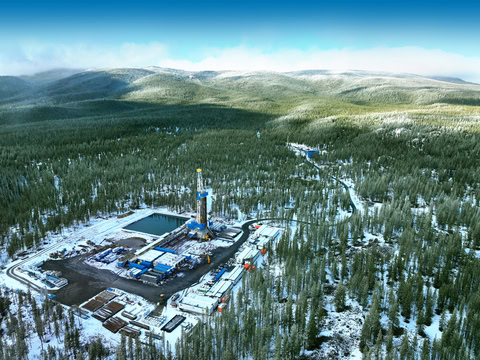
Google has agreed to purchase 50 MW from Quaise Energy’s planned Project Obsidian in Central Oregon, with first power targeted as early as 2030 from a superhot geothermal development still moving through its early commercial stages.
Published by Allstream Insiders
Allstream Insiders Summary
Quaise Energy and Google have signed a power purchase agreement for 50 megawatts of planned superhot geothermal generation from Project Obsidian in Central Oregon. According to the companies’ November 17 announcement, Google would begin purchasing power as early as 2030 to support its existing data-center operations in The Dalles, Oregon, and the surrounding region.
The agreement identifies a customer and contracted power volume, but it is not a final investment decision, construction-start notice or disclosure of a project budget. The companies did not announce the PPA’s term, price, interconnection point, generating-unit configuration, permit status, engineering contractor, drilling contractor or equipment-supply awards.
Project Obsidian’s initial phase is expected to use conventional drilling technology to reach superhot geothermal conditions at commercial scale. Quaise said a later phase is expected to use its millimeter-wave drilling technology. Both the operating target and the second-phase technology plan are forward-looking.
Project Obsidian agreement at a glance
| Item | Company-reported detail |
|---|---|
| Project | Project Obsidian, Quaise’s planned superhot geothermal project in Central Oregon |
| Offtake agreement | Google PPA for 50 MW of planned geothermal power |
| Targeted power-delivery timing | As early as 2030 |
| Initial development approach | Conventional drilling technology intended to access superhot geothermal conditions at commercial scale |
| Later development concept | Expected use of millimeter-wave drilling technology |
| Construction employment estimate | Expected to support 200 to 400 jobs, according to Quaise |
| Permanent-jobs estimate | More than 50 engineering and operations positions expected |
A PPA advances commercial planning but does not confirm construction
A power purchase agreement establishes an intended commercial arrangement between a power producer and a buyer. In this case, Google has committed to purchase 50 MW from the planned project once it is online, giving Quaise a named customer for part of the anticipated output.
The release does not state that Project Obsidian has received all required permits, completed drilling, reached financial close, started construction or selected its EPC and equipment suppliers. It also does not disclose a capital cost, PPA price, contract duration, project capacity beyond the 50-MW purchase commitment or the terms governing any power available to other customers.
Two-phase development plan centers on drilling technology
Quaise said the initial phase would use conventional drilling technology to access superhot geothermal conditions at commercial scale. The company defines superhot geothermal as an enhanced geothermal-system approach that seeks to use the Earth’s heat at conditions beyond those typically accessed by conventional geothermal projects.
The second phase is expected to use millimeter-wave drilling, which Quaise says can work with existing drilling rigs to reach superhot conditions. The release describes that phase as a future technology deployment and does not provide a drilling schedule, demonstration milestone, well count, depth, well design, project-cost allocation or commercial-operation date for that work.
Financing and public-support context
Quaise said it completed a $180 million Series B financing round in August 2026, including a $35 million investment from Nabors Industries. The November announcement does not allocate those funds to Project Obsidian, nor does it say the financing fully funds construction of the project.
Quaise has also separately announced selection for up to $25 million in U.S. Department of Energy support for superhot geothermal field testing and resource work. Selection for potential federal support is distinct from a completed grant disbursement, a project construction budget or a commercial-operation authorization.
Data-center load and regional power context
Google said the planned supply would support its data-center operations in The Dalles and Oregon communities. The company operates three data-center campuses in The Dalles and said its Oregon operations are part of its broader effort to add clean-energy resources as power demand grows.
Project Obsidian’s 50-MW PPA is a defined offtake commitment, not a statement of Google’s total data-center load or of Project Obsidian’s final generation capacity. The announcement does not identify transmission upgrades, utility interconnection agreements or grid-equipment contracts associated with the project.
Allstream perspective: a meaningful offtake signal for a still-emerging geothermal project
Allstream perspective: The Google PPA gives Project Obsidian a named 50-MW customer and a target delivery window, both important commercial signals for a geothermal project under development. The project’s technical approach also places drilling performance and subsurface confirmation at the center of its path to execution.
If the project advances through permitting, financing and detailed engineering, work categories could include geothermal reservoir assessment; well and drilling-program design; drilling rigs and directional services; casing, tubulars and wellheads; high-temperature completion equipment; power-island engineering; turbines, generators, transformers and switchgear; transmission and interconnection work; civil construction; controls; and operations-support services. These are potential needs for a geothermal development of this type, not contracts or procurement awards announced by Quaise or Google.
The next material updates would be project capacity, site and well details, permits, interconnection arrangements, financing, drilling milestones, a final investment decision, supplier selections and construction notices. Until then, the announcement should be tracked as a PPA-backed development milestone rather than confirmation that a 50-MW facility is already under construction or operating.