Allstream Insiders Summary
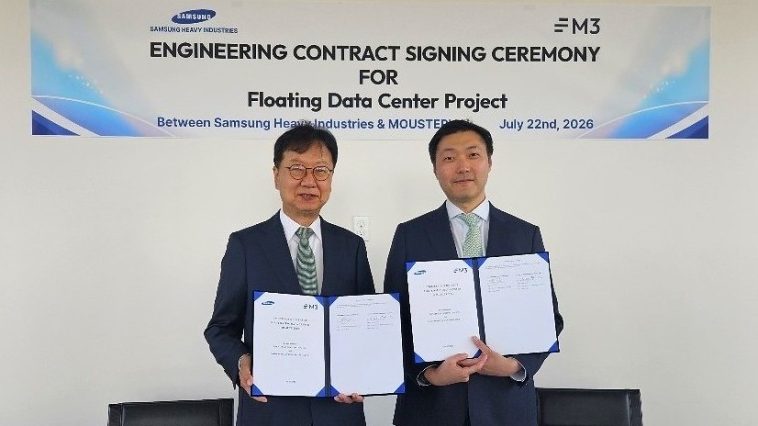
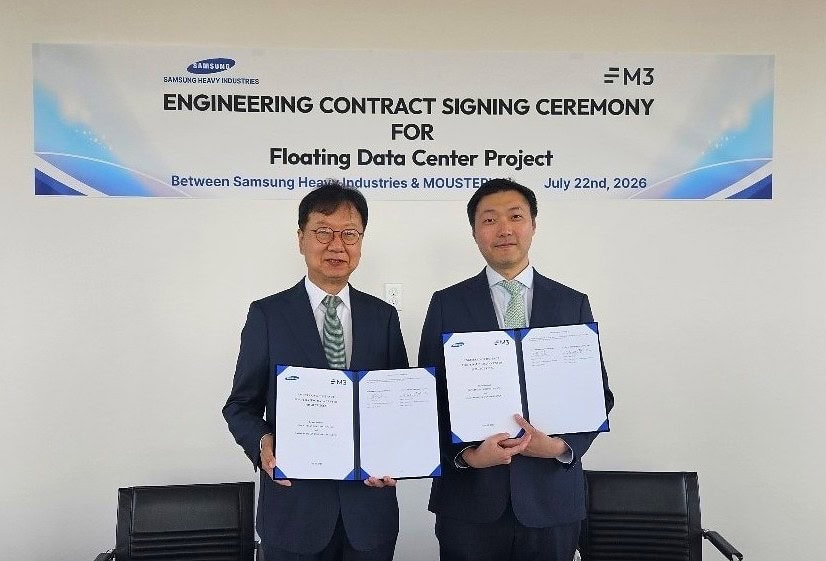
Mousterian Corporation and Samsung Heavy Industries have signed an engineering contract for the partnership’s first planned moored floating data-center deployment in the United States. The agreement advances their April 2026 cooperation framework into basic design, detailed engineering and production design.
Each proposed floating data-center unit is being designed to provide 50 megawatts of critical IT capacity. The companies identified Texas and other key U.S. markets as planned deployment areas but did not announce a specific site, waterway, city or power-generation facility.
The engineering program is intended to establish the technical baseline for a later engineering, procurement and construction contract. Mousterian and Samsung Heavy said they intend to execute that definitive EPC agreement before or upon completion of the current engineering work. The announcement does not establish that the EPC contract has been signed.
The disclosed engineering scope includes:
- Basic design.
- Detailed engineering.
- Production design.
- Development of purpose-built, moored floating data-center units.
- A target of 50 MW of critical IT capacity per unit.
- A liquid-cooled computing configuration intended for high-density AI workloads.
- A bulk non-evaporative cooling concept that the companies say would use no potable water and return no process discharge to the surrounding waterway.
The engineering-contract value, total project investment, construction schedule, shipyard, tenant, power supplier and commercial operating date were not disclosed.
Floating Data Center Project Tracker
| Project item | Company-reported detail |
|---|---|
| Developer | Mousterian Corporation |
| Engineering partner | Samsung Heavy Industries |
| Project type | Purpose-built, moored floating data center |
| Current stage | Basic design, detailed engineering and production design |
| Agreement date | Executed at a signing ceremony on July 22, 2026 |
| Planned capacity | 50 MW of critical IT capacity per unit |
| Planned markets | Texas and other key U.S. markets; exact site not disclosed |
| Cooling concept | Bulk non-evaporative cooling with liquid-cooled AI-compute support |
| Classification | American Bureau of Shipping is expected to serve as classification society |
| Future contracting step | Definitive EPC contract intended before or upon completion of engineering work; not yet announced as executed |
| Engineering-contract value | Not disclosed |
| Total capital investment | Not disclosed |
| Construction and operating schedule | Not disclosed in the announcement |
What Did Mousterian and Samsung Heavy Sign?
The companies signed a contract covering engineering and design—not procurement, fabrication or construction of an operating data center. Mousterian and Samsung Heavy will jointly perform the basic design, detailed engineering and production design for the proposed floating units.
This work is intended to convert the parties’ April memorandum of understanding into a defined technical package. The announcement describes it as their first definitive project agreement under the cooperation framework.
The engineering phase is expected to establish the basis for a future EPC contract. The parties said they intend to execute that agreement before or when the engineering work is completed, but intention does not equal an awarded construction contract. No fabrication notice, shipyard reservation, equipment purchase or construction authorization was disclosed.
What Does the 50-MW Figure Represent?
The 50-MW figure represents the planned critical IT capacity of each proposed floating data-center unit. It is not a power-plant rating, current load, grid-interconnection approval or confirmed customer commitment.
Critical IT capacity generally refers to the electrical capacity intended for computing equipment and supporting technology loads. A completed facility would also require power for cooling, pumps, controls, safety systems and other infrastructure, so total facility demand could differ from the stated IT capacity.
The announcement did not publish total facility power demand, redundancy configuration, backup-generation capacity, battery capacity or power-usage effectiveness as a numeric design value. It described the intended performance only as a very low power usage effectiveness.
Where Is the First Floating Data Center Planned?
Mousterian and Samsung Heavy identified Texas and other U.S. markets but did not disclose a final deployment site. The pilot concept is intended to place floating data centers adjacent to existing power-generation assets and maritime infrastructure.
The release did not name:
- A Texas city, county, port or waterway.
- A specific power plant or utility.
- A power-purchase or tolling agreement.
- A grid interconnection or dedicated generation project.
- A property owner, port authority or mooring operator.
- A data-center tenant, hyperscaler or AI customer.
Until a site agreement or development announcement is issued, Texas should be treated as a planned market rather than a confirmed project location.
How Would the Floating Cooling System Work?
The proposed design uses a bulk non-evaporative cooling concept intended to support facility-scale, high-density liquid-cooled AI computing. The companies said the configuration would consume no potable water and return no process discharge to the surrounding waterway.
They also said removing the air-cooled chillers and fans commonly used by land-based facilities is intended to reduce noise. These statements describe design objectives for a project still in engineering; they are not operating results from a completed U.S. unit.
The release did not identify heat-exchanger vendors, cooling-fluid specifications, water-intake infrastructure, environmental permits or thermal-performance test results. Those details will be important for evaluating the final cooling configuration and its effects at a selected site.
What Role Could Samsung Heavy Industries Have?
Samsung Heavy brings shipbuilding, offshore engineering and floating-asset delivery experience to the design program. Its existing portfolio includes LNG carriers, drillships, floating production systems and other maritime assets.
Mousterian said off-site shipyard fabrication could allow platform construction to proceed in parallel with site preparation. That is the developer’s proposed delivery model, not confirmation that fabrication has started or that a particular Samsung Heavy shipyard has received a construction order.
The production-design work could help define hull or barge configuration, mooring systems, equipment integration, marine safety, utilities and construction sequencing. The current announcement does not allocate those packages or identify suppliers.
What Is the American Bureau of Shipping’s Expected Role?
The companies said the American Bureau of Shipping is expected to serve as classification society for the project. Classification review can address the maritime structure and applicable technical standards, but the announcement does not state that final class approval has been issued for the deployment.
The phrase “expected to serve” should remain conditional. The release also does not indicate that classification would replace local, state or federal approvals that may apply to the mooring location, waterway, power connection, environmental systems, construction or data-center operation.
What Could the Project Mean for Contractors and Suppliers?
If the engineering phase advances into a definitive EPC award, the project could involve both maritime and data-center supply chains. Potential work may include:
- Floating-platform engineering and fabrication.
- Mooring, marine access and waterfront infrastructure.
- Medium- and low-voltage electrical systems.
- Transformers, switchgear and power controls.
- High-density liquid-cooling equipment and heat exchangers.
- Data halls, racks, cabling and network infrastructure.
- Fire protection, monitoring and physical security.
- Backup-power and energy-storage systems if included in the final design.
- Site preparation and power interconnection at the selected location.
- Classification, inspection, testing and commissioning services.
These categories are conditional Allstream analysis based on the announced concept. They are not confirmed procurement packages, supplier awards or evidence that work is currently open for bid.
Allstream Perspective
The Mousterian–Samsung Heavy agreement is significant because it moves a floating data-center concept into detailed project engineering, but it remains an early development-stage program. For contractors and equipment suppliers, the next decisive milestone will be execution of the definitive EPC contract.
The project could connect expertise from shipbuilding, offshore fabrication, power infrastructure and high-density computing. However, commercially actionable scope will depend on the final site, power arrangement, tenant requirements, classification pathway and EPC structure.
Until those items are disclosed, the confirmed facts are limited to the engineering award, the planned 50-MW critical IT capacity per unit and the companies’ stated intention to pursue deployment in Texas and other U.S. markets.